
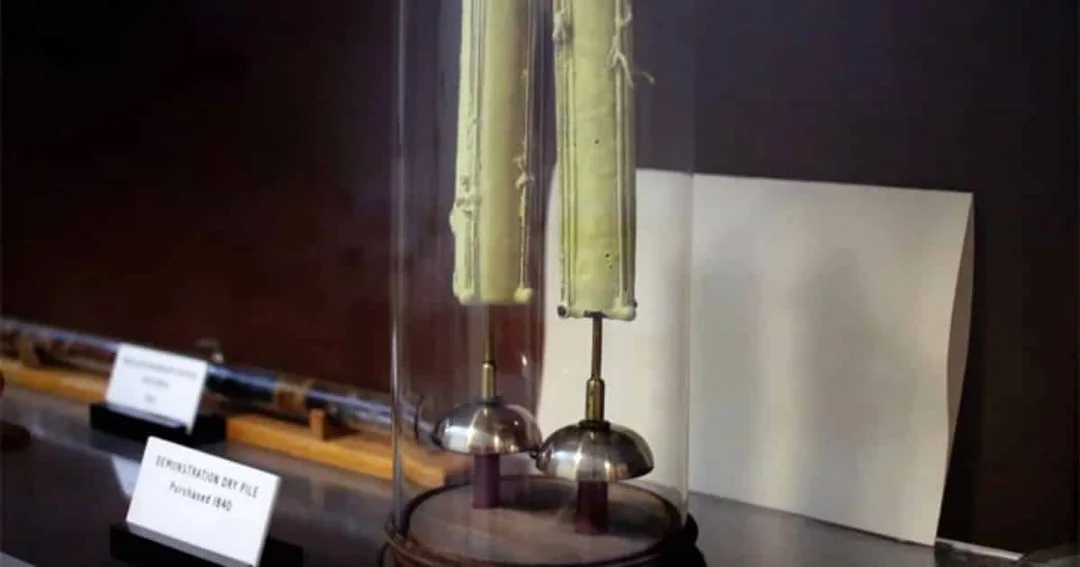
A Battery That Hasn't Run Out for 186 Years!
Scientists Still Don't Know the Secret Behind This Battery's Strange Lifespan!
At the University of Oxford, there is a strange device that has been working almost continuously since 1840; a device that, despite being around for about 186 years, still has enough power in its battery to continue functioning.
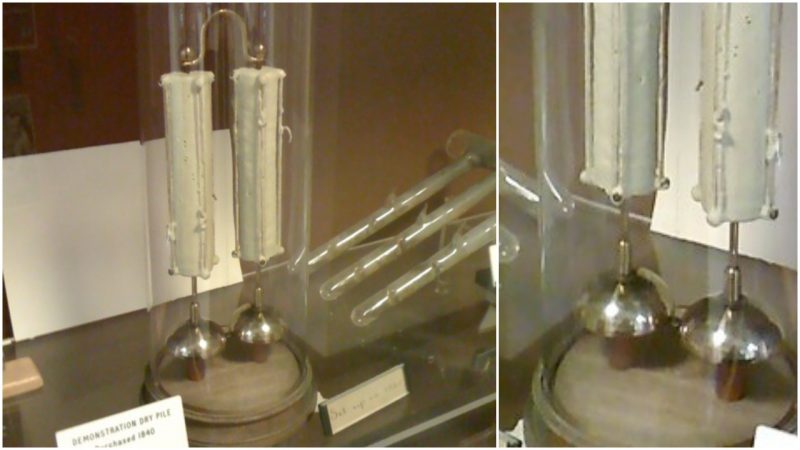
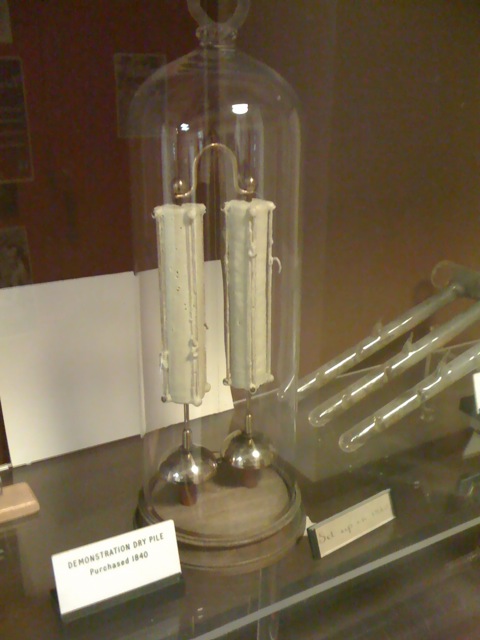
This device, known as Oxford Electric Bell or Clarendon Dry Pile, consists of two small bells and a metal ball. The metal ball moves between the two bells and strikes one of them with each back-and-forth motion.
According to estimates, this movement occurs almost twice every second, and the number of recorded strikes by the device during this time has reached about 10 billion times.
What is the Secret of the Old Oxford Battery?
One of the most fascinating aspects of this experiment is its battery. Despite the device's very long lifespan, scientists still do not know for sure what materials are used inside the battery.
The main reason for this uncertainty is that opening the battery could damage the device and halt one of the longest scientific experiments in the world.
Researchers speculate that the battery's structure may be similar to that of old dry cells and consists of many layers of metal and paper. Some reports also mention the presence of about 2,000 pairs of metal and paper disks in its probable structure.
How Does This Device Work Without Stopping?
The mechanism of the Oxford Electric Bell is based on electrostatic force. A small metal ball with a diameter of about four millimeters is positioned between the two bells.
The ball is initially drawn towards one of the bells, and after contact, its electric charge changes, causing it to move towards the opposite bell. This process is repeated over and over.
However, the energy produced is very low, and the device's electric current is estimated to be around one nanoampere. For this reason, the bell of the device does not produce a significant sound today, and the device itself is kept inside a glass enclosure.
Will This Bell Work Forever?
Despite the very long lifespan of the Oxford Electric Bell, this device is not an example of "perpetual motion".
Its battery will eventually lose its energy, or the mechanical parts of the device may stop due to wear and tear. The noteworthy point is that it is still unclear when this will happen.
This unusual durability has made the Oxford Electric Bell one of the most famous long-term experiments in the history of science and one of the most interesting examples of battery technology.
Source: Zoomit
Comments
At least 3 characters. Shown after a moderator approves it.
No comments yet
