

Bandari Burqa; The Art of Showcasing Women's Beauty in the Madness of Iran
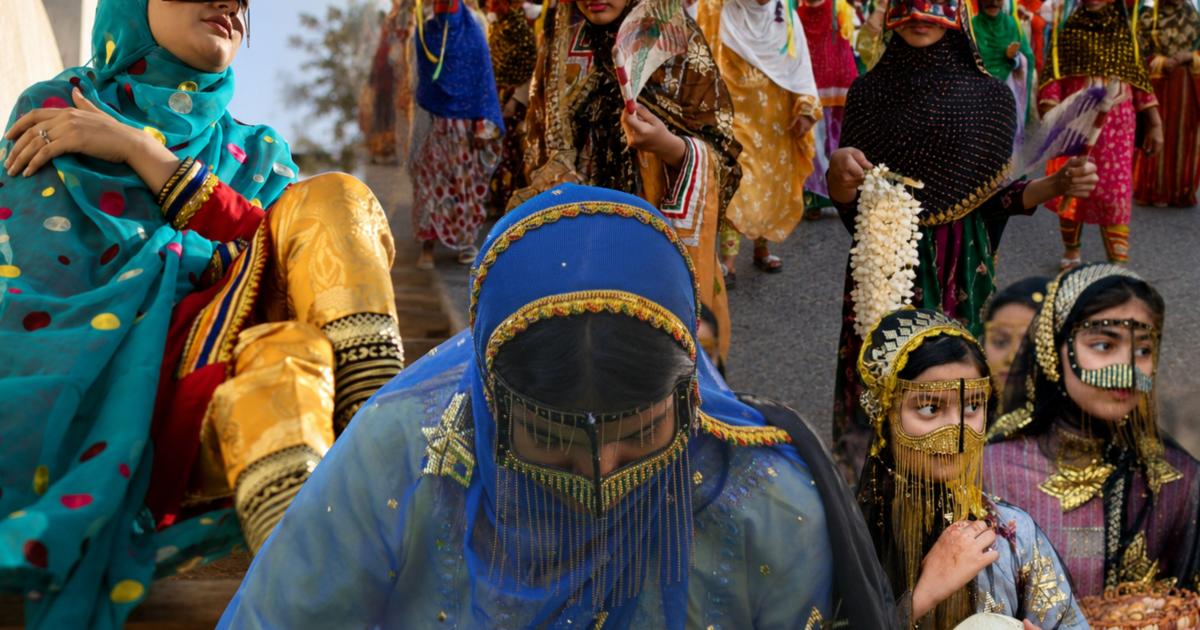
The port burqa, adorned with red embroidery, delicate golden frames, and dancing tassels, is one of the most beautiful facial adornments of women living along the southern shores of Iran. This covering rests on the face but does not necessarily obscure it; rather, in many instances, it transforms the face into a small canvas for color, pattern, stitching, and decoration. Some exquisite burqas, due to the use of golden threads and valuable embellishments, become objects of economic and artistic value in addition to their functional role.
In a study conducted in 2021 about the women of Qeshm and Baluchestan, researchers showed that the burqa of Hormozgan, unlike the common black veil in some Arab countries, is more a means of expressing individual identity than a symbol of religious identity or a tool for standardizing women's appearances.
The color, shape, and decorations of the burqa can provide information about the age, marital status, social standing, and even the economic capability of its owner. In contrast, in other societies, the uniform black veil is more associated with anonymity and the reduction of visual differences.
Another study published in 2018, after a year of field research among burqa-wearing women in Qeshm, reached a similar conclusion. This research presents the burqa not merely as an ideological symbol but as a cultural product through which women redefine their social identity.
There are various views regarding the etymology of the word 'burqa'. Some researchers relate it to the Persian word 'pardeh' and the concept of covering and barrier, which has taken on various forms through interactions among Persian, Arabic, and Turkish languages. In parts of western Hormozgan, this covering is also known by the Arabic name 'Batulah'.
The colorful port clothing is an important element of the visual identity of women in southern Iran. The diversity of this attire is so extensive that different designs, colors, and sewing styles may be observed from one village to another.
Walking through the handicraft markets of Bandar Abbas, Qeshm, or Minab shows that this tradition is still alive; showcases filled with burqas in shades of crimson, azure, gold, orange, and black, each the result of hours of sewing and decoration.
The burqa, even with changing lifestyles and the reduction of some traditional functions, should not be erased from the visual memory of southern Iran. In many contemporary images, the burqa is not just a daily covering but a sign of cultural belonging and a reinterpretation of local aesthetics.
Comments
At least 3 characters. Shown after a moderator approves it.
No comments yet
