


House Rental in Dubai 2026; From Contract to Ejari and DEWA
Categories:

A brief response: The safe rental path in Dubai starts with determining the total budget, not just the price of the ad. After reviewing the consultant's license and ownership, document the financial conditions and repairs, sign the unified contract, register Ejari, and then activate DEWA and the moving permit. Do not make any significant payments without a receipt and a clear name of the recipient.
Renting a house in Dubai has a relatively structured process, but the speed of the market can push tenants into hasty decisions. Most disputes usually arise from four points: costs not visible in the ad, repair responsibilities, the condition of the air conditioner, and the method of returning the deposit.
This guide explains the path from the initial search to the key handover and clarifies which amounts are official and which figures are merely common market practices.
Start-up rental costs at a glance
Item | Amount or Calculation Method | Status |
|---|---|---|
Rent | Agreed annual amount, usually in one to several checks | Contractual and negotiable |
Property Deposit | Typically 5% for unfurnished and 10% for furnished in the market | Common practice; contract amount is the criterion |
Consultant Commission | Typically around 5% of the annual rent plus VAT in the market | Common practice; confirm before viewing |
Online Ejari Registration | Total 177.75 AED | Official fee announced by DLD at the time of review |
Ejari Registration at Center | Total 220 AED | Official fee announced by DLD at the time of review |
DEWA Deposit | 2,000 AED for apartment; 4,000 AED for villa | Official fee and refundable under conditions |
DEWA Activation | 155 AED for small meter | Official fee announced |
Chiller, Gas, and Relocation Permit | Depends on the building and service provider | Must be inquired separately |
Official fees may change. Before payment, check the latest amount on Dubai REST, the DLD website, or DEWA. Commission and deposit percentages, unit rates, and mandatory fees are not standard for all contracts and should be clarified before signing.
Step 1: Determine Your Actual Budget Ceiling
If you only consider the annual rent, you may not be prepared for the necessary funds on the signing day. Create a budget sheet and put these items together:

First rent check and subsequent check dates.
Deposit, commission, and Ejari registration fee.
Deposit and activation of DEWA, internet, chiller, or gas.
Moving costs, building permit, and purchase of basic appliances.
Monthly commuting costs from home to work and school.
To convert annual rent to a monthly budget, divide the rent amount by 12; however, keep the actual money needed at the time of signing separate based on the number of checks. The article "Cost of Living in Dubai in 2026" provides a more complete picture of the monthly budget.
Step 2: Verify the Listing and Consultant
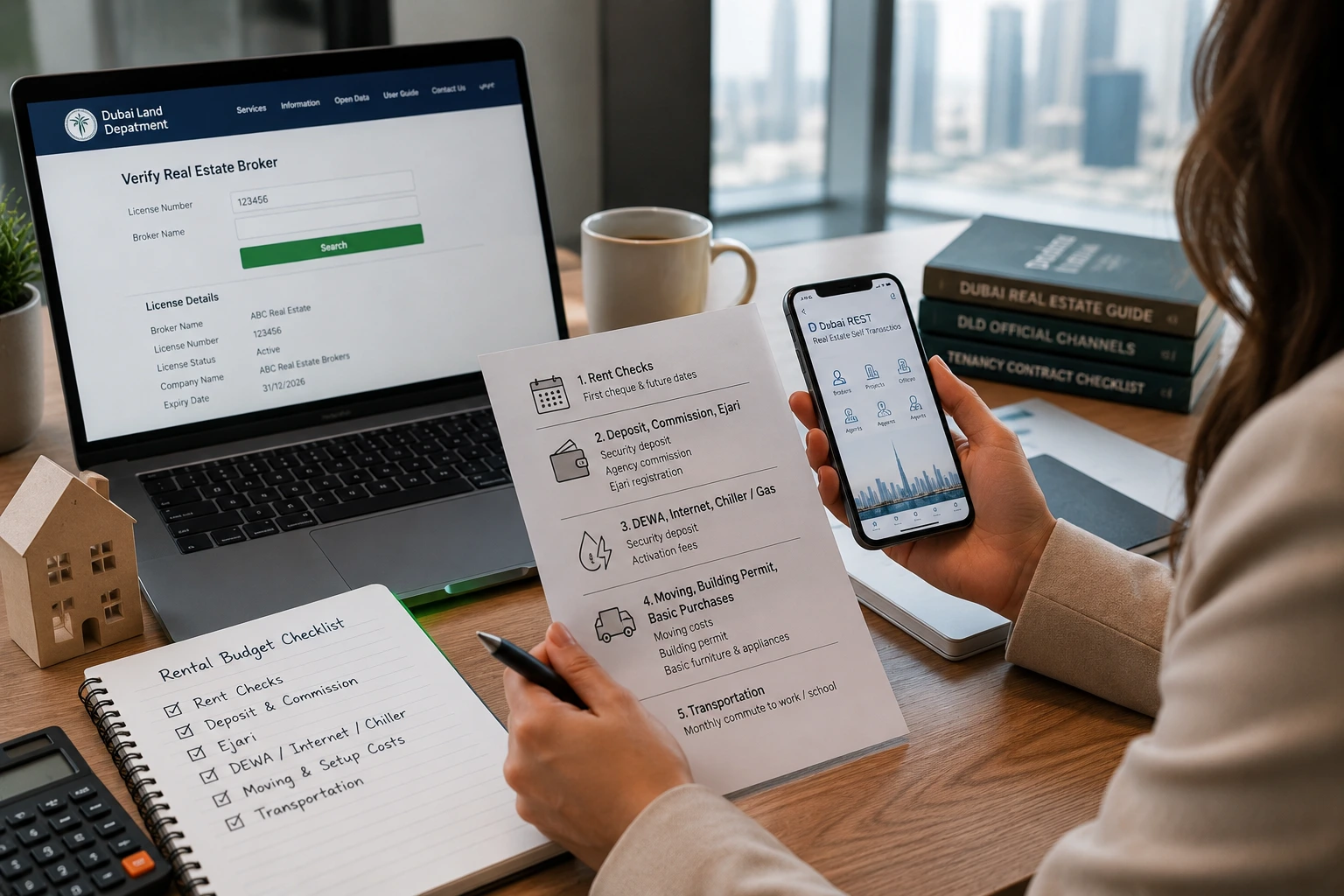
A very low price, request for immediate deposit before viewing, or a different name for the account holder are warning signs. Before payment:
Check the consultant's name and license number and the office through official DLD or Dubai REST channels.
See the property in person or, if you are abroad, request a live and verifiable viewing.
Ensure the signatory is the owner or a representative with valid power of attorney.
Obtain an official receipt with the company name, payment description, and property details.
Issue the rent check or transfer only in the name that is justified in the contract and ownership documents.
For the "reservation" payment, also write the refund conditions on the receipt. A verbal statement from the consultant does not replace written text in case of future disputes.
Step 3: Inspect the House with a Technical Checklist
During the visit, take photos and videos and do not only focus on the appearance of the furniture. Test the following:
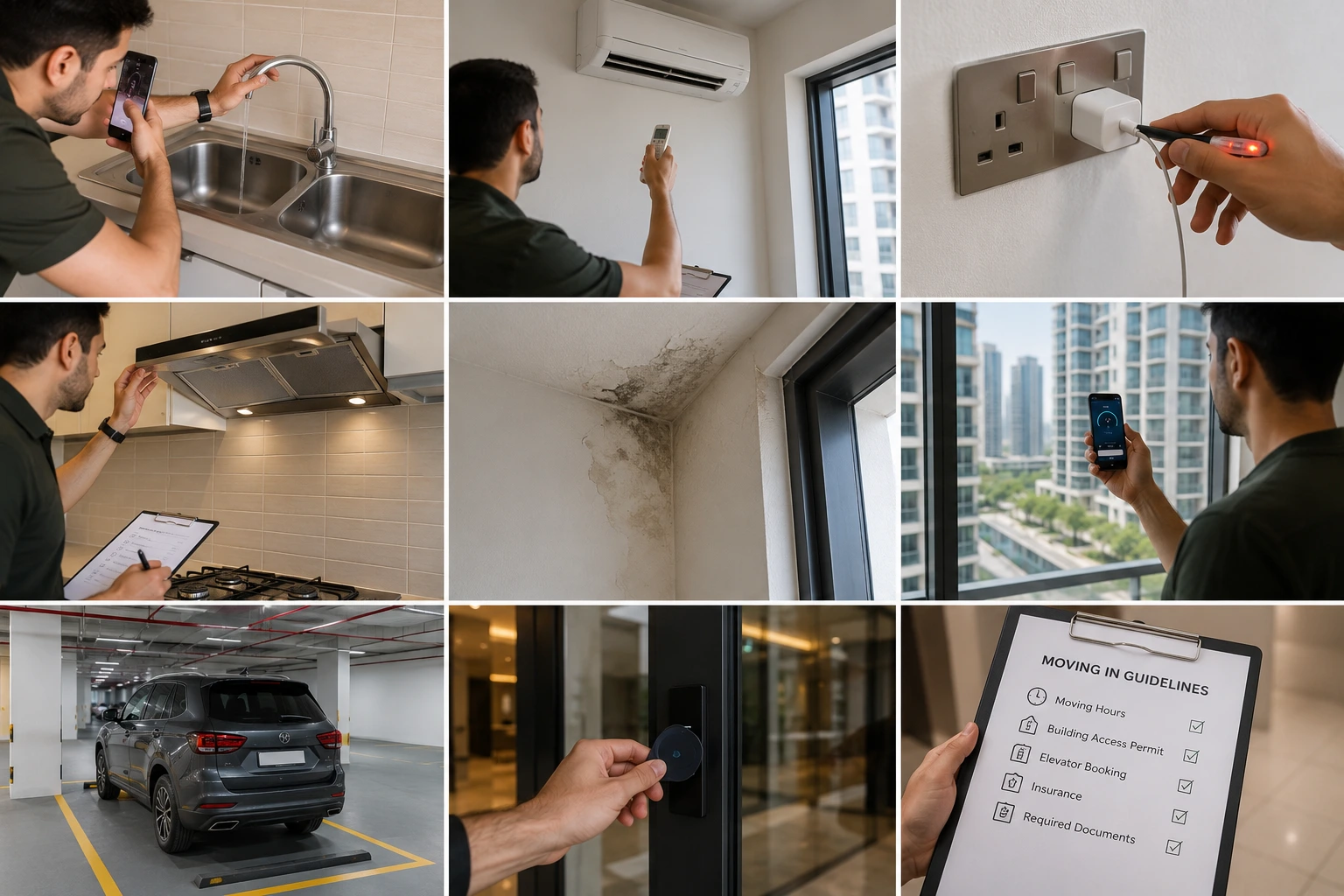
Water pressure, hot water, leaks under the sink and in the bathrooms.
Cooling in each room, fan noise, and thermostat condition.
Outlets, lights, stove, hood, and appliances included with the house.
Moisture, mold smell, cracks, and signs of recent repairs.
Mobile coverage, available internet speed, and sun exposure direction.
Designated parking space, access card, storage, and pet rules.
Allowed moving hours and necessary documents for the building permit.
If the owner is to repair or replace an item, write the item, deadline, and payment responsibility in the rental proposal or contract annex.
Step 4: Negotiate Terms That Really Affect Costs
Negotiation is not just about the rent amount. Sometimes reducing the number of checks is valuable for the owner, and sometimes the tenant prefers to have more payments at a slightly higher amount. Clarify these points:

The rental amount, number and date of checks, and penalties for bounced checks.
Start date, duration of the contract, and renewal conditions.
Responsibility for minor and major repairs and any ceiling amount specified in the appendix.
Status of the chiller, gas, parking, and building expenses.
Conditions for early termination, notice period, and penalties.
Conditions for returning the deposit and delivery standards at the end.
A detailed list of furniture and appliances in the furnished house.
According to Dubai's rental law, the landlord must deliver the property in a condition that allows the tenant to use it as intended, and the general principle is the landlord's responsibility for necessary maintenance and repairs; however, the law also allows for different agreements in the contract. Therefore, read the maintenance appendix word for word.
Step 5: Review the Unified Contract and Appendix
DLD publishes the Unified Ejari Tenancy Contract template. The main contract is usually a summary, and many details are included in the Addendum. Before signing, check the consistency of this information:
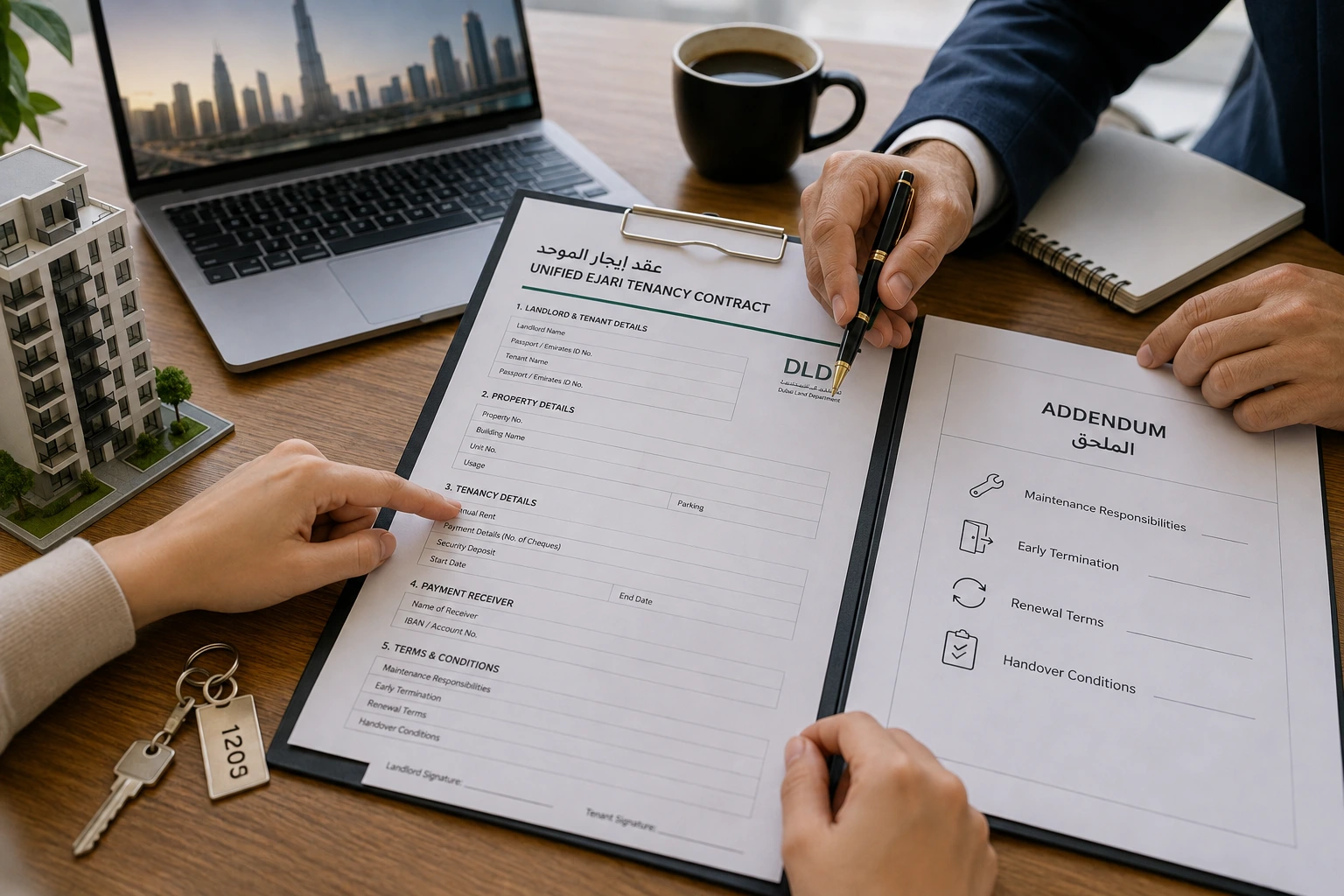
Name and document number of the landlord and tenant.
Property number, building, unit, usage, and parking.
Rental amount, checks, deposit, and start and end dates.
Name of the recipient of each payment.
Responsibility for repairs, early termination, renewal, and delivery.
Any promises made during negotiations.
If the English text is unclear to you, seek a professional translation or explanation. A quick signature in hopes of later corrections creates unnecessary risk.
Step 6: Register Ejari
Ejari is the official registration of the tenancy contract in the DLD system and is required for many services, including connecting DEWA and residency matters. DLD requests the unified tenancy contract and identity information for registration through Dubai REST or the website; at service centers, the original contract, Emirates ID, and, if a representative is acting, a power of attorney are required.
At the time of reviewing this article, the total online registration fee was reported as 177.75 AED and 220 AED for registration at the center. Keep the receipt and Ejari certificate with the contract, deposit receipt, and copies of checks in one folder.
Step 7: Activate DEWA and Building Services
Registering Ejari is integrated with the Move-in process at DEWA. After receiving the notification, pay the deposit and activation fee. According to official information, the apartment deposit is 2,000 AED, the villa deposit is 4,000 AED, and the activation fee for the small meter is 155 AED. DEWA has stated that the usual activation time is a maximum of 15 working hours after payment is completed.
Then coordinate with the building management regarding the following:
Permission and timing for moving in and any potential elevator deposit.
Access cards, parking, and vehicle registration.
Chiller or gas contract, if separate from DEWA.
Building regulations and maintenance and security contact numbers.
Step 8: Create a Handover Report
On the handover day, take a continuous video of the entire house and write down any defects in the report. Record the meter numbers, total keys and cards, condition of walls, flooring, appliances, and furniture, and keep a signed copy or email confirmation from the landlord and consultant.
This document is very important at the end of the contract for distinguishing "normal wear and tear" from damages and for returning the deposit. The law allows for the collection of a deposit to guarantee the property's condition, and the landlord must return all or the remainder of it according to the condition and obligations after the contract ends.
Common Tenant Mistakes
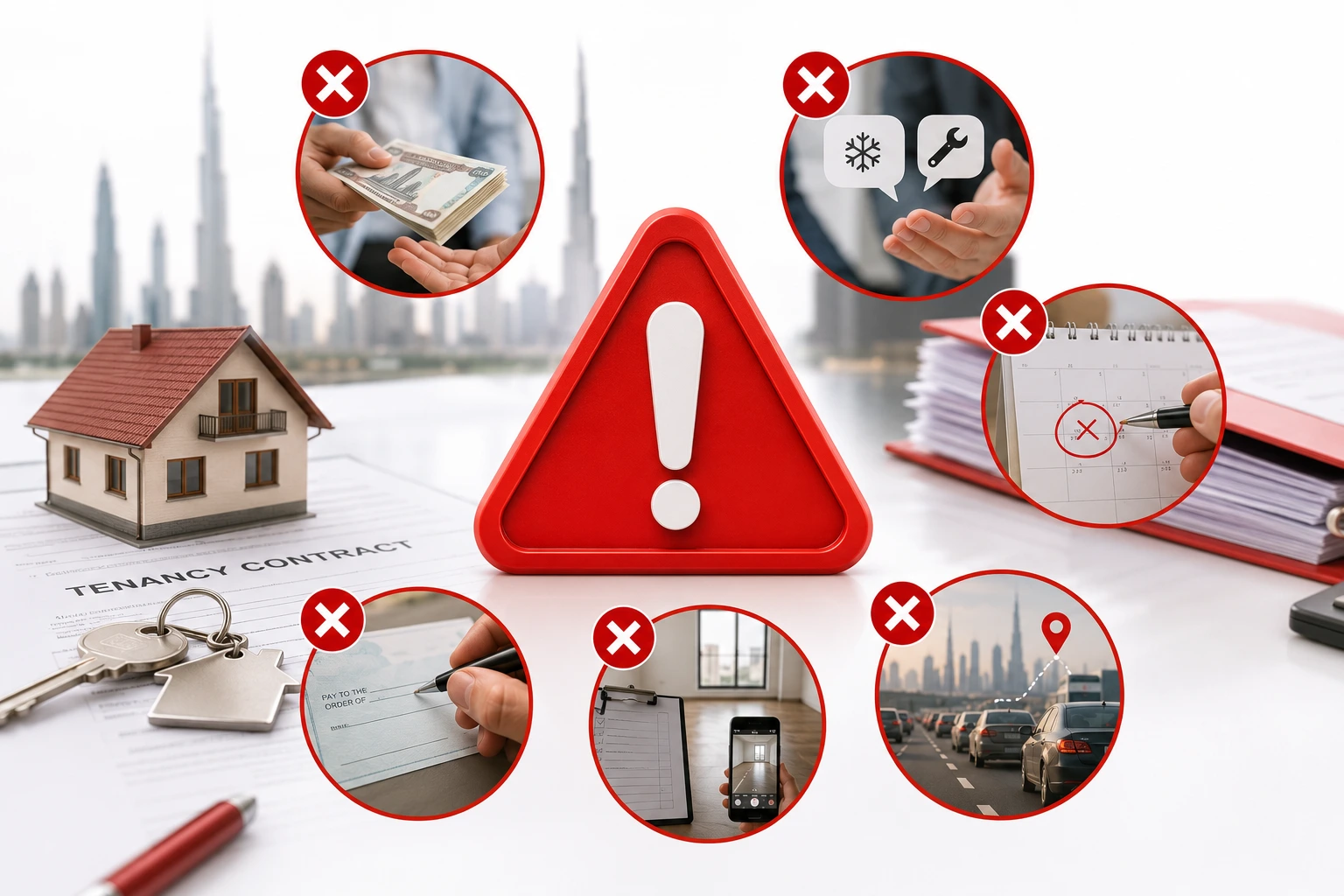
Payment before verifying the identity of the consultant, owner, and property.
Trusting verbal statements such as 'free chiller' or 'all repairs with the owner'.
Not reading the early termination clause and renewal fees.
Issuing a check in the name of a person or company not specified in the contract.
Receiving the house without a list of defects and dated photos.
Forgetting commuting costs when choosing a cheaper neighborhood.
Frequently Asked Questions
What is Ejari and when should it be registered?
Ejari is the rental contract registration system in Dubai. Register it after signing the contract and before completing many services such as Move-in at DEWA, and keep the certificate.
What percentage is the rental deposit in Dubai?
In the market, usually 5% of the annual rent is seen for unfurnished properties and 10% for furnished properties, but this percentage is not a fixed amount for all contracts. The amount, deduction conditions, and refund method must be documented.
Does the owner pay the Ejari fee or the tenant?
In practice, the tenant often pays it, but the responsibility for payment can be specified in the contract. Clarify this point before signing.
Is the owner responsible for all repairs?
The legal principle is to deliver a usable property, and the owner's responsibility for maintenance is necessary unless the parties have agreed otherwise in the contract. An annex to the contract may assign minor repairs to the tenant up to a ceiling.
What should I do to end the contract?
Observe the notice period and contract conditions, coordinate Move-out with management, settle bills, and document the handover status. Only return the keys against a receipt and send a written request for the refund of the deposit.